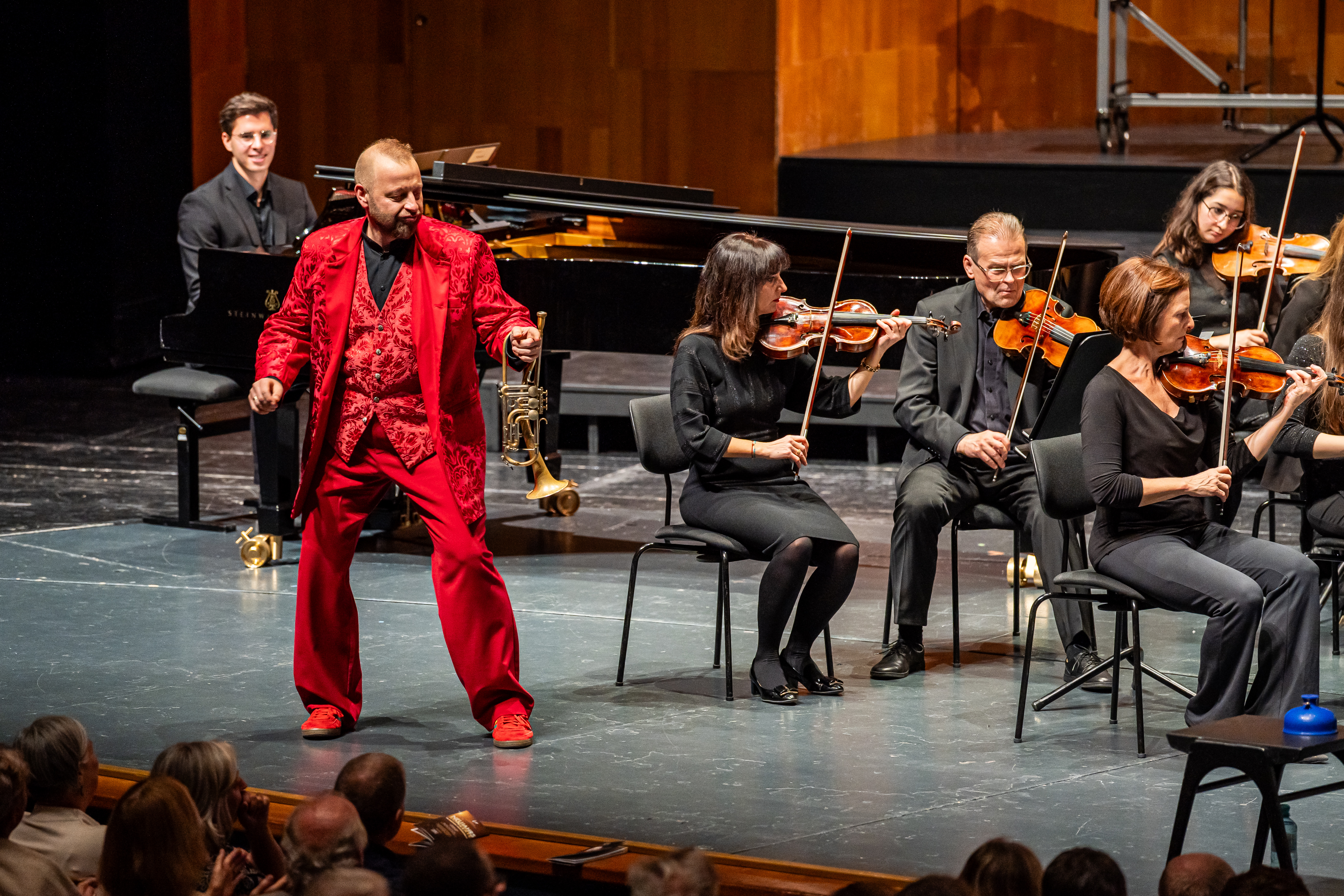
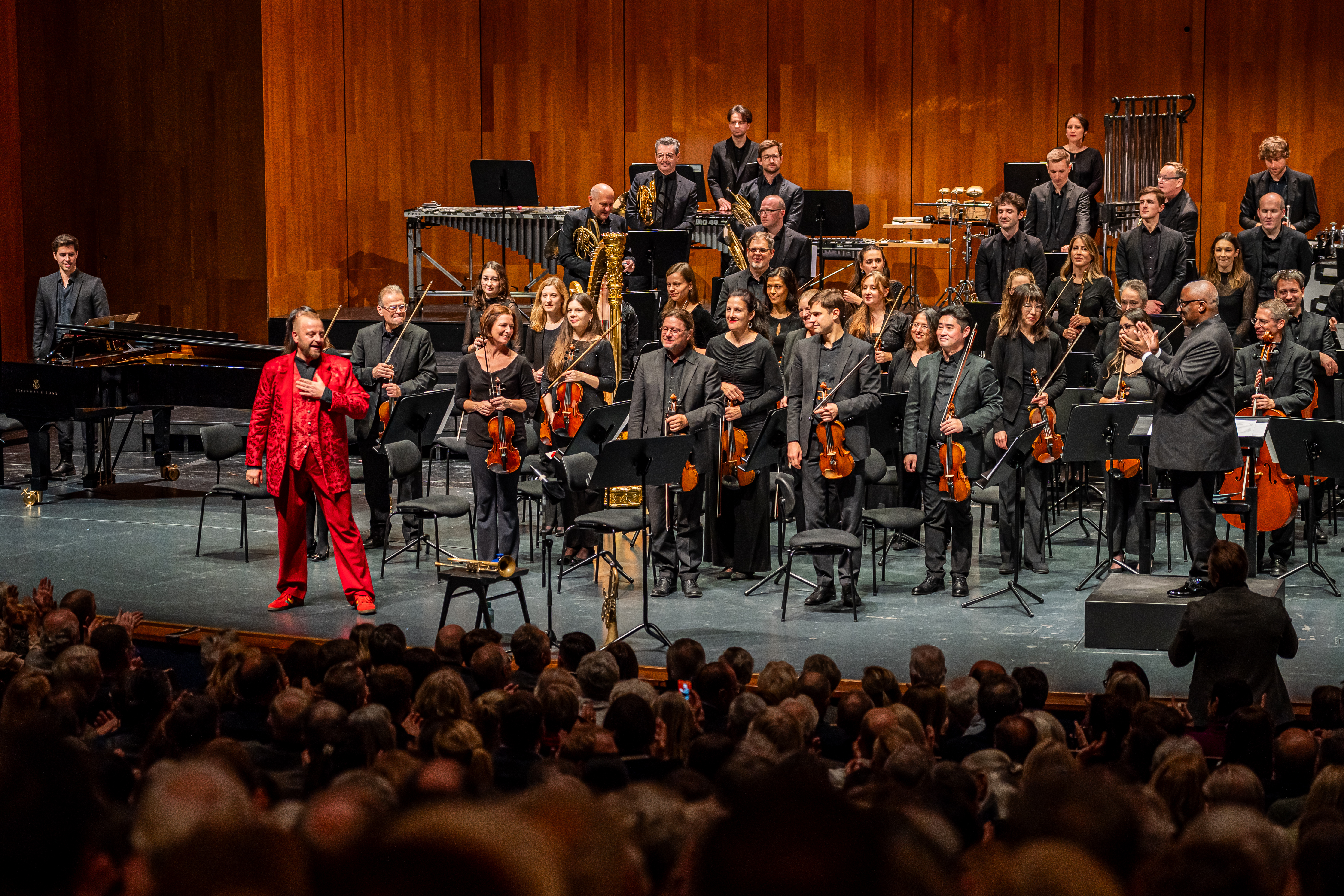
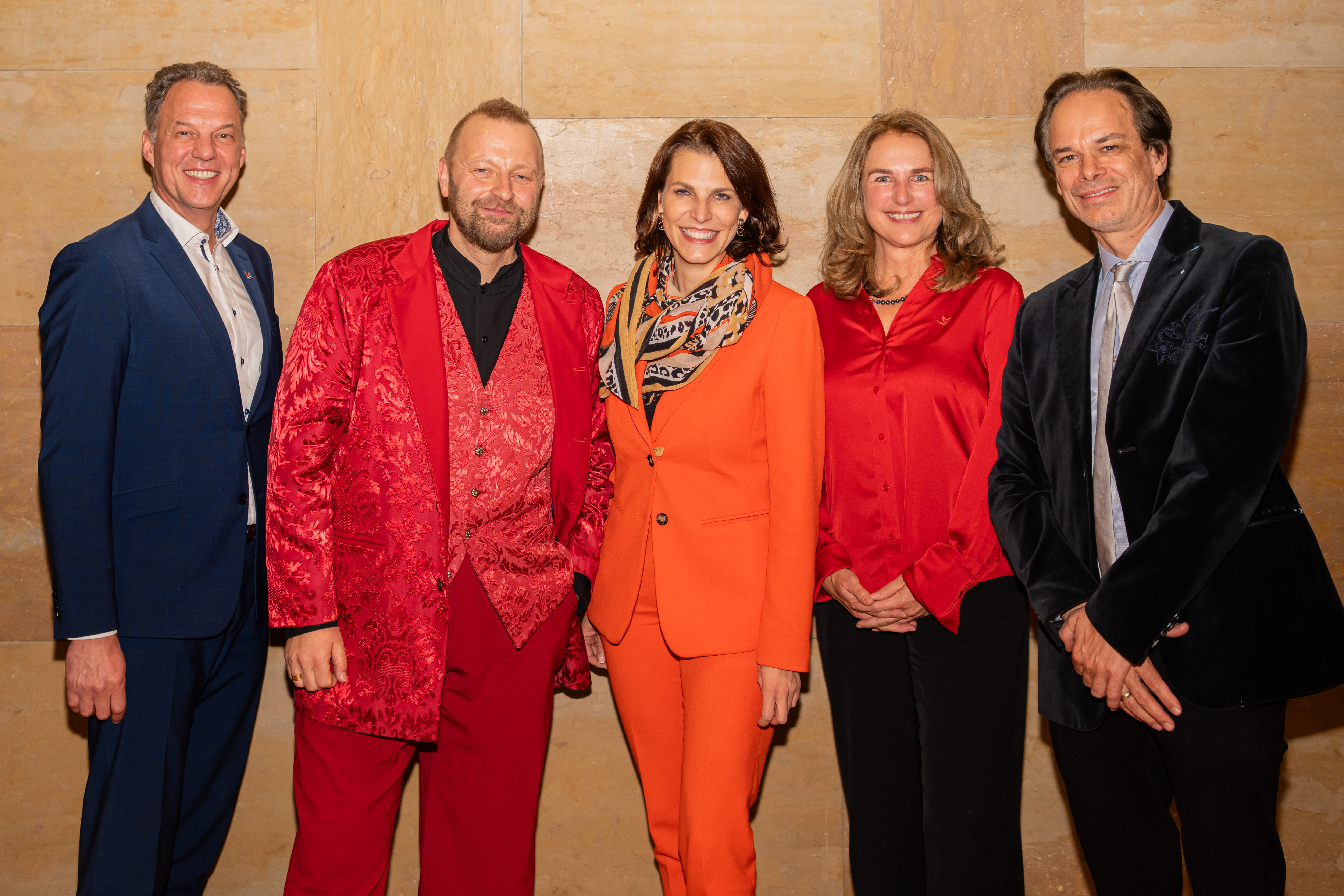
Thomas Gansch thrilled audiences at the Großes Festspielhaus
During the intermission, the Salzburg Cultural Association hosted a meeting between Thomas Gansch from Lower Austria and Karoline Edtstadler, Governor of Salzburg. Everyone agreed: music is something wonderful.
Salzburg Festival Hall
Gansch beautifully romantic! - Trumpet virtuoso Thomas Gansch with symphony orchestra
November 9, 2025 | Helmut Rieger, PNP
Exceptional trumpeter Thomas Gansch will not celebrate his 50th birthday until the last day of the year, but he is celebrating it in advance with performances across the Alpine republic. The charismatic all-rounder has audiences at his feet. Benjamin Schmid, the new artistic director of the Salzburg Cultural Association, calls him a “phenomenon” in his welcome speech. Under the punning motto “Gansch schön groß” (Gansch beautifully big), he demonstrated his skills as a soloist, composer, presenter, and singer at the Festspielhaus. The Tonkünstler Orchestra of Lower Austria, conducted by Wayne Marshall, rolled out the red carpet for him with a symphonic performance.
In addition to variations on Liszt's “Liebestraum,” film music by Francis Lai, and excerpts from Bernstein's musical “On the Town,” the program featured compositions by Gansch: a “Festive Opening” in baroque style, a three-movement trumpet concerto, and pieces from his folk music suite “Alpen und Glühen” (Alps and Glow).
The banter must always keep pace, otherwise it would be dull,” he recently commented on ORF about his way of presenting music. The mischief sparkles not only in his eyes, but also from the bell of his trumpet and flugelhorn. He humorously quotes from classical music and jazz at breakneck speed. His “Finale Grande” (subtitled “History of Western Art Music in Three Minutes”) may be provocative to purists, but it offers a showpiece of the highest caliber: Bach, Mozart, and Tchaikovsky scurry around the corner.
Nevertheless, Gansch cannot and will not hide the fact that he is basically a romantic: he builds beautiful cantilenas and, especially in ballads (“Stardust”), lays melodious solos over soft string sounds.
Everything fits: the precision of the interplay between soloists and orchestra, the originality of the arrangements (Johannes Berauer), and the humor of the ludicrously virtuoso Thomas Gansch. He always comes across as charming and relaxed; the master trumpeter is also a gifted entertainer. When he prances onto the stage in his red three-piece suit, the audience's affection for him is audible. Again and again he steps aside, pointing to the orchestra and conductor. During the first encore (“Misty”), Wayne Marshall accompanies him sensitively on the piano, and during the second (a blues), Gansch pulls out all the stops once again, quoting from Gershwin's “Rhapsody in Blue” and Benatzky's “Weißes Rössl.” The audience thanks him with frenetic applause for a most enjoyable evening.